Author: Dr. Paul ZilbermanMedical Doctor, Anaesthetist, Hadassah Medical Center Jerusalem, Israel This article addresses the notion of buoyancy and why drinking beer in space (the ISS usually orbits in the thermosphere), or any carbonated drink for that matter, does not produce the known tingling sensation we can feel in our noses here on Earth. So let’s first briefly consider what is buoyancy? In simple terms, whenever an object is put into a fluid there are several forces that act upon it. The liquid exerts a force from the bottom upwards that tries to push that object up. Then there is the liquid force itself, let’s call it weight, that pushes an object downwards. However, because the liquid pressure increases the deeper you go down into the fluid, there will always be an upwards force bigger than the downward force. This can be explained by looking at the formula for hydrostatic pressure: Hydrostatic pressure = pgh In this formula, p is the density of the liquid, g is the gravitational force (9.81 m/s2) and h is the height of the fluid column measured from the surface. Keeping all the other parameters of the formula constant, the "h" at the bottom of a submerged object will be higher than the one at its top. But we also have here another component: the "g". Well, there is practically no "g" in space, unless we artificially produce it. So, in this case, all the objects inserted or included into a fluid will just stay there. Of course, there are many other factors that play a role here, for example the superficial tension of the fluids etc., however, for the sake of simplicity I am considering here only the buoyancy. So, nothing happens with the CO2 bubbles inside the fluid because they are no lighter than the fluid that surrounds them, perhaps looking something like in this photo: 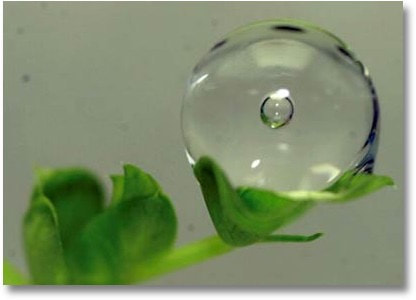 Image credit: NASA, Public domain This not mixing between the fluid and gases within creates a hard enough life for anyone who would like to enjoy a beer in space (hypothetically, at least as alcohol consumption is not permitted on the ISS), but let's also not forget the cabin temperature of roughly 20 degrees Celsius, which is way too high to enjoy an ice cold beer. If you want to cool it a bit forget leaving it outside too - just take a look at what the temperatures are "outside", unless of course you want to lick your beer like an ice-cream!
Our thanks go to space enthusiast Ermis Divinis, aged 11, who used his digital media skills to create this fun summary of the Mars rovers, which have provided the scientific community with so much valuable data about the Red Planet. Enjoy!
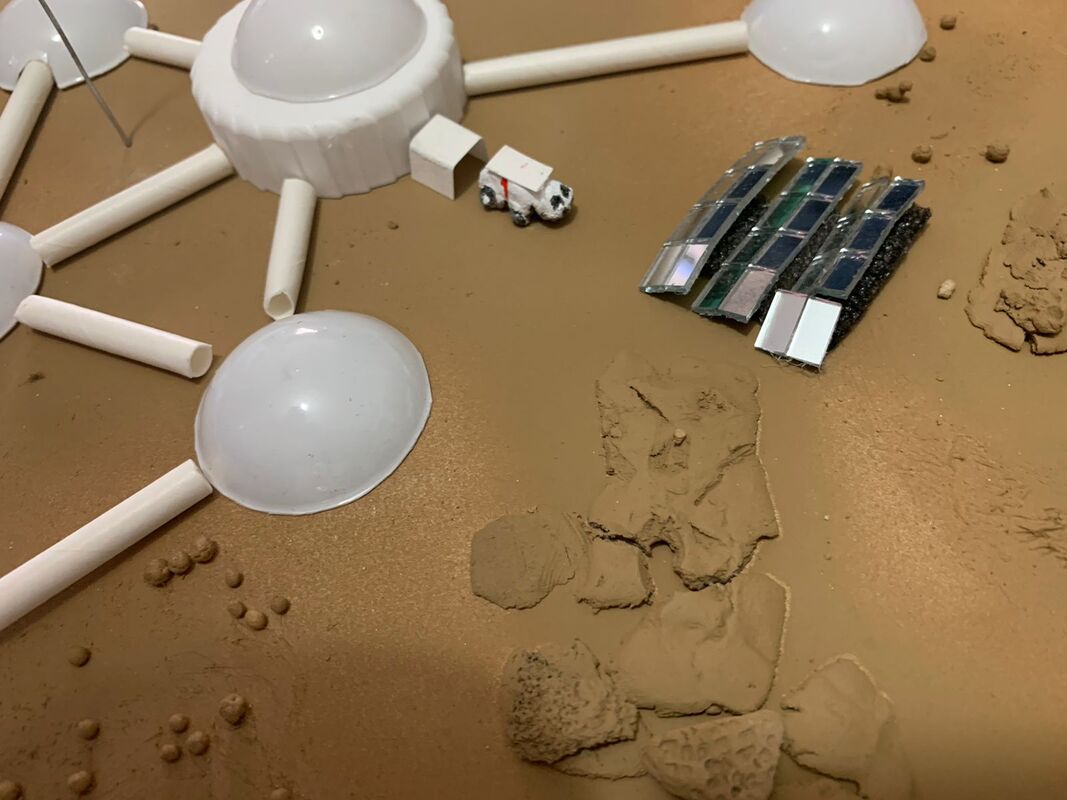
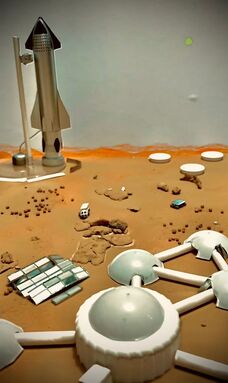
Anna Karahan European Space Foundation - ERC Coordinator & Inspiration Zone producer It’s 2077 We have been expanding our presence on Mars for several decades now, which involves trial missions, in-depth research, terrain checking, the first human landing on the surface of the Red Planet and the creation of a scientific base. Driven by curiosity and the desire to learn and expand the human possibilities of adapting to new living conditions, we decide to establish colonies on Mars. The inhabitants of the new Martian city-states are not accidental. They were selected based on their health, intellectual and psychological abilities as well as the skills they will contribute to building a new society, drawing on the lessons learned from the mistakes made on Earth... Warsaw, 4-6 March 2022 25 students, divided into interdisciplinary groups, begin working on the project of five Martian colonies. They include representatives of geology, law, architecture, design, and culture. Supported by mentors, they try to find answers to the following question: What location on Mars will be the most appropriate for their colony, considering the possibility of easy landing and take-off, access to a water source, as well as the scientific and soil-forming potential of the area? In terms of architecture and design, they must remember about the impact of temperature, sandstorms, harmful radiation, and meteorite strikes, but also make sure the colonies are self-sufficient and provide shelter for thousands of people. Also in the spotlight are such important questions as: How will our senses react on Mars? What do we, as humans, need to survive in an extreme environment? The Mars Colony Hackathon participants also discuss whether they want to transfer to Mars the current Earth culture as well as the economic and political status quo, or... on the contrary? Should they take the current trends in sustainability, climate change, inequality, diversity, and the impact of technology on people into account? What values, traditions and rituals will accompany them? Another sol of 2077 begins.
There are already five colonies on Mars: IGNIS, MARIS, MONADA, M.O.D. AND WEST COAST COLONY. They are all self-sufficient, but willingly cooperate with one another and with Earth in the exchange of goods, know-how as well as education and tourism. They all signed a non-aggression pact. Goods are transported by centrifugal force technology, and people move between colonies on sub-orbital rocket flights. In the close vicinity, inhabitants travel by rovers. We visit the IGNIS colony, located in the Athabasca Valley in the Elysium Planitia region. It arose from a research colony founded in the 2040s by the International Organisation whose inhabitants revolted and declared independence. The main IGNIS doctrine in international relations is not getting involved in the political affairs on Earth. Its inhabitants live in symbiosis with nature, and they base their sustainable development on science. They obtain water thanks from the nearby pingos, and their source of energy is a cosmic solar power plant in a geostationary orbit, sending energy in the form of high-frequency radio beams. The power plant has movable panels, which enable the plant to draw energy throughout the day and night. The inhabitants expect that at a later stage the development of the energy sector will be based on small modular reactors (SMR). The IGNIS system is a hybrid of the republic and direct democracy. Everything that is produced in the colony as well as all the tools and items that the inhabitants use belong to the republic and are used on a shared basis. 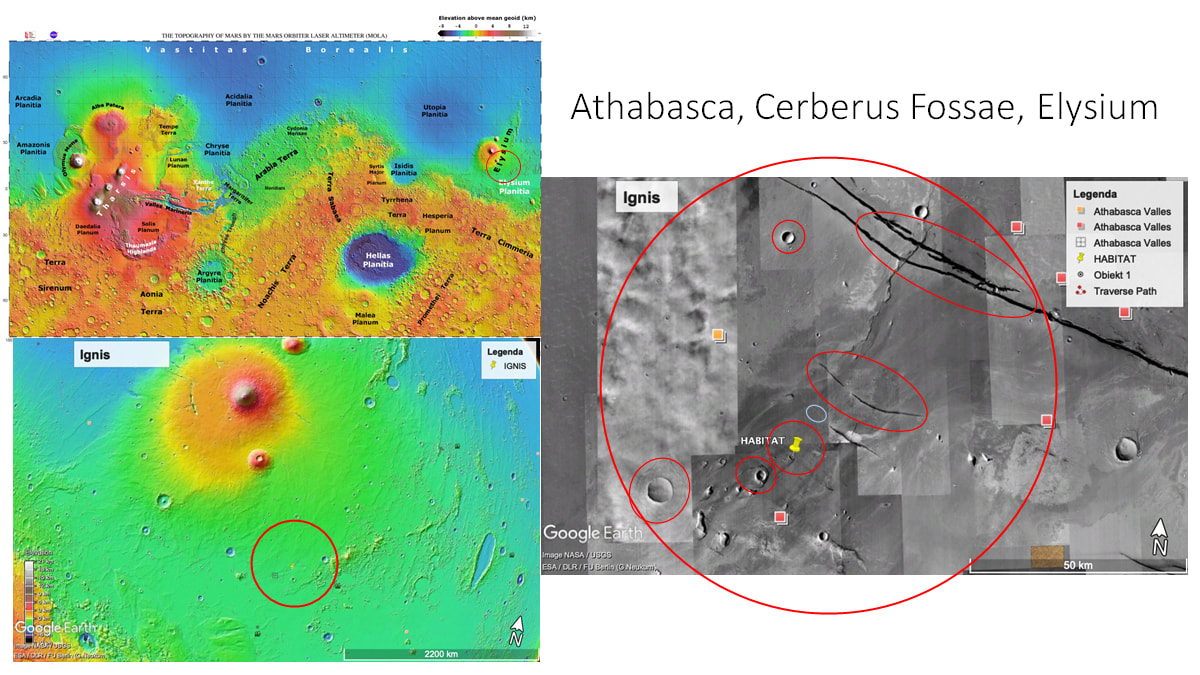
We continue our journey to visit the MARIS colony, located in Valles Marineris.
As a result of human activities on Earth, the climate crisis deepened, natural resources were depleted, and biodiversity was disappearing. In the social field, we were affected by wars, social inequality, discrimination, and polarisation. The human condition was also deteriorating because of loneliness and civilisation diseases. The founders of MARIS wanted to change that, so they decided to create their Martian colony – a new community based on responsibility and integrity of human beings with the planet, community, and themselves. The local habitat is famous for its hydroponic crops and baths with saunas. The community cares about good mood and mental health of every citizen, which ensures the proper functioning of the entire colony. Therefore, apart from integration, a common dining room, kitchen, or medical, educational and laboratory space, it places great emphasis on providing the inhabitants with private space. As guests, we are invited to one of the capsule-rooms that function as bedrooms. We immediately experience thermal comfort and silence. We can also regulate the amount of light. The whole room is finished with a soft material and there is a pleasant smell in the air... 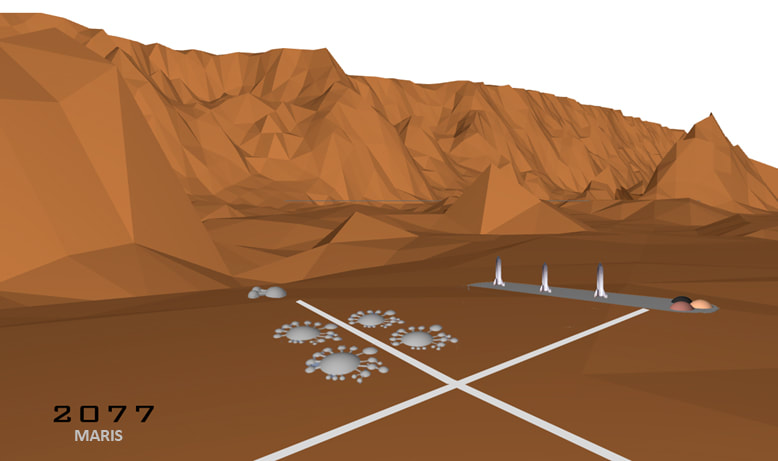
Next sol we travel to the northernmost colony of MONADA, located between Mamers Valles and Deutronilus Mensae.
In some philosophical systems, a monad is a basic substance, on the one hand elemental, permeated with individuality, and on the other hand, rich in various types of capital. It gives almost unlimited development opportunities. The MONADA inhabitants treat their colony as an organism which, having a huge and varied potential, can not only develop independently, but also establish relationships with other entities in the world, which is a continuous collection of elementary substances. Its architectural solutions are also based on spherical units, which are self-sufficient and independent in a crisis, but for the sake of proper functioning of the society they connect with one another to form a network. Each unit has the necessary sectors located on different levels: industry, food production, public utilities, such as hospitals, schools, and religious places, as well as housing. Light runs through each sphere from above and cascades across the room. The radial layout of rooms and internal space can be modified by moving the walls. The colony has one of the largest deposits of magnesium-rich sulphur oxide and olivine as well as access to several rubble glaciers which constitute the source of water. MONADA sells its medicines, steel, solutions related to design and architecture, including modular furniture, “my personal sun” lamps, personalised “Martian wallpapers”, aromatic postcards from Mars as well as a patented circulation system and inter-colonial rover loading system both to the countries on Earth and the Martian colonies. 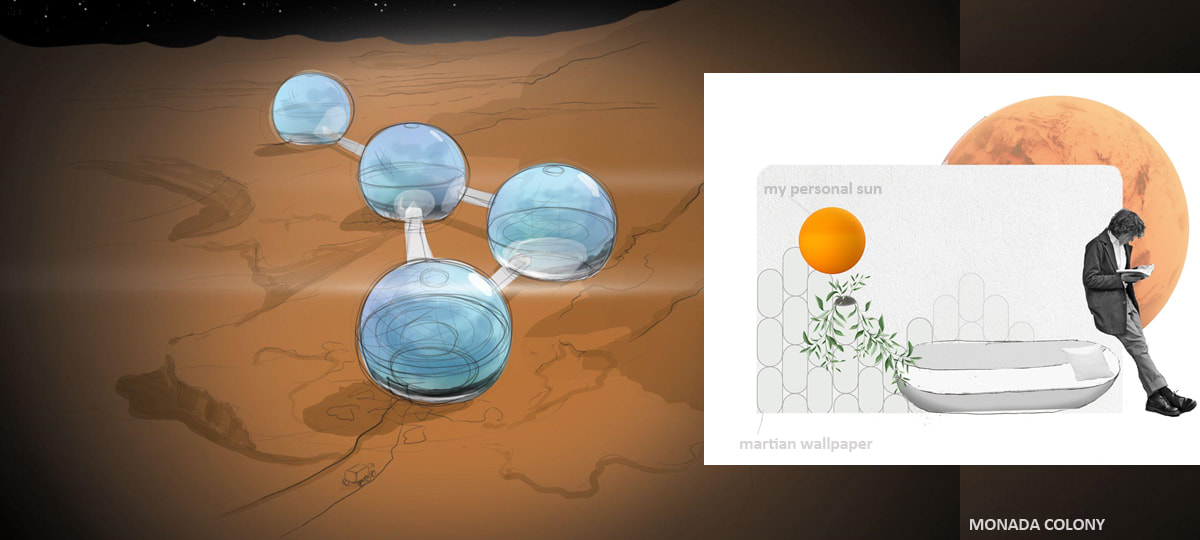
The next stop on our Martian journey is M.O.D. (Martian allotments), located in Dao Vallis.
It is an international, democratic colony, still dependent on the Earth for the supply of certain raw materials and resources. It was built of modular segments created with a 3D printer and completely hidden under the surface of Martian regolith. The main element of the individual residential modules are internal allotments used for garden cultivation, experimenting, and relaxation. The colony focuses on simplicity and minimalism in limited Martian conditions, hence the white walls of the rooms and easy-to-modify segments. The virtual reality used in the colony, however, allows its inhabitants to create an environment that gives a sense of greater security, avatars, or everyday outfits to express themselves and their individual style. Special overalls worn by the inhabitants check their vital functions, hormone levels, and work-life balance simultaneously. M.O.D. conducts intensive research to increase recyclability and the best possible use of limited Martian resources as well as to develop production and plantations that provide the colony with food and vital products. The joint work of the M.O.D. inhabitants strengthen intergenerational ties, giving an opportunity for integration and talks. Each of the inhabitants undergoes compulsory training to be able to work in various sectors of the habitat if necessary. 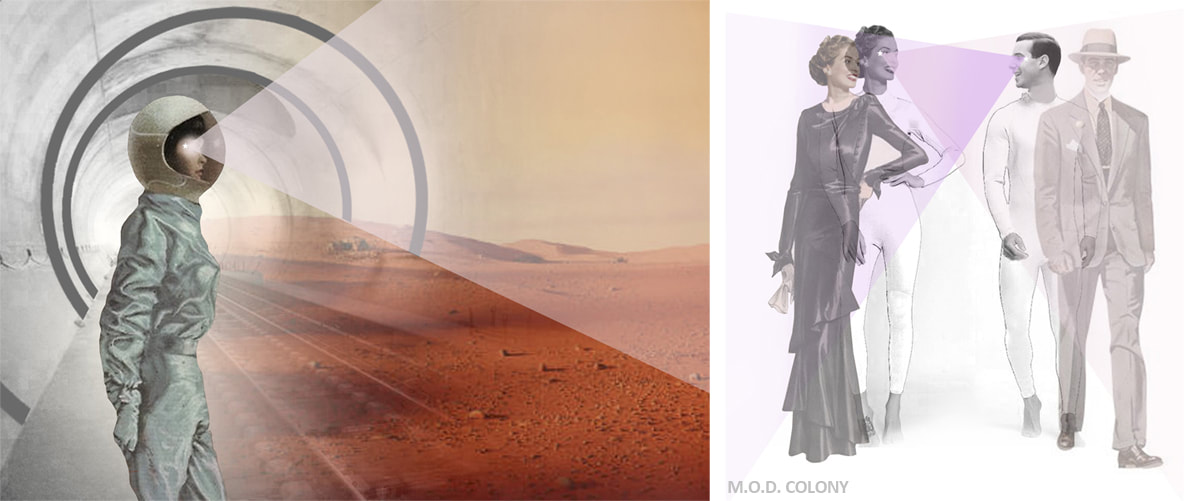
WEST COAST COLONY, located in the Olympus Mont region, is the last stop of our trip.
Separation of powers, peaceful space exploration, cognition and science, high level of education, cooperation between humans and artificial intelligence, transhumanism, and bionics – these are the bases of its functioning. The area chosen by the inhabitants for their colony is convenient not only in terms of living, but also for geological research. The magnesium- and iron-rich basalt rocks present here are a good raw material for construction and the production of soil fertilisers. The colony bases its economy and exports on them. The colony is highly automated. Robots are used in the transport of raw materials and products from/to factories, the production of modular elements for housing, cultivation, services, and even administration. The West Coast Colony inhabitants believe that as humans we have certain limitations, and we must constantly overcome our weaknesses. Therefore, they focus on transhumanism and gene improvement in such a way as to adapt the human body to the difficult Martian conditions. They also place great emphasis on inclusiveness, cultural and social life, common rituals as well as education and learning the truth about the universe. The colony also includes green zones for rest and recreation with plants brought from Earth... 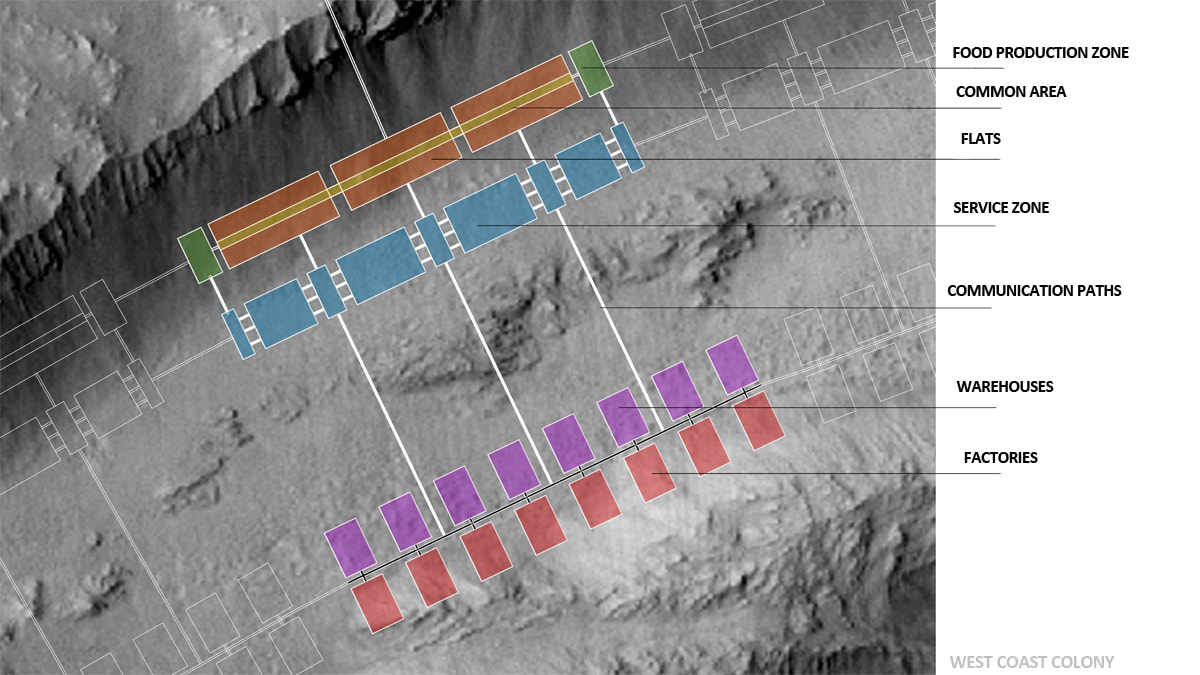
Warsaw, 6 March 2022 We are going back to Earth. There is a war going on across our eastern border and climate change brings us intense winds, rains, earthquakes, and volcanic eruptions... Some people question the sense of organising such design and humanist workshops or hackathons. But maybe travelling to Mars in our imagination will help us see and express what we do not like here on Earth, change the things that should be changed or even adopt a completely different approach to things we know? Is it not thanks to our dreams and imagination that we are able to look into the future and create the world we want to live in? Not only on Mars, but also here on our planet Earth... The Mars Colony Hackathon was organised by the US Embassy and the European Space Foundation in cooperation with the Polish Space Agency and Venture Café. The workshop took place on 4-6 March 2022 at the Cambridge Innovation Centre in Warsaw. Congratulations to the winning team members: MONADA – Julia Jeka, Karolina Kruszewska, Tomasz Leonik, Oliwia Mandrela and Kamil Serafin. *Blog also published on the European Space Foundation website This blog is promoted and supported by the:  Virtualmente em Marte - Minha Experiência como Astronauta Análogo na Estação Habitat Marte24/2/2022
Author: Maurício PontesOperational Safety & Crisis Manager, Pilot, Air Accident Investigator Encerramos após 11 dias (ou 11 sois, como denominamos o dia em Marte) a missão análoga (virtual) #96, celebrando quatro anos do estabelecimento da Estação Habitat Marte. Tive o privilégio de representar a InnovaSpace nessa experiência, que se revelou produtiva e instigante. As missões virtuais foram criadas em função da pandemia de COVID-19, como forma de manter a estação operando e fomentando o intercambio de experiências e informações sobre Marte e os desafios de se chegar ao planeta vermelho. A pioneira estrutura análoga, entretanto, é muito mais que isso. Localizado no agreste do Rio Grande do Norte, na cidade de Caiçara do Rio do Vento, o Habitat Marte é uma base física onde as condições inóspitas do terreno e algumas características relacionadas ao solo local propiciam um sítio ideal ao estabelecimento de missões com variados focos de pesquisa. Uma palavra que está sempre presente é sustentabilidade. 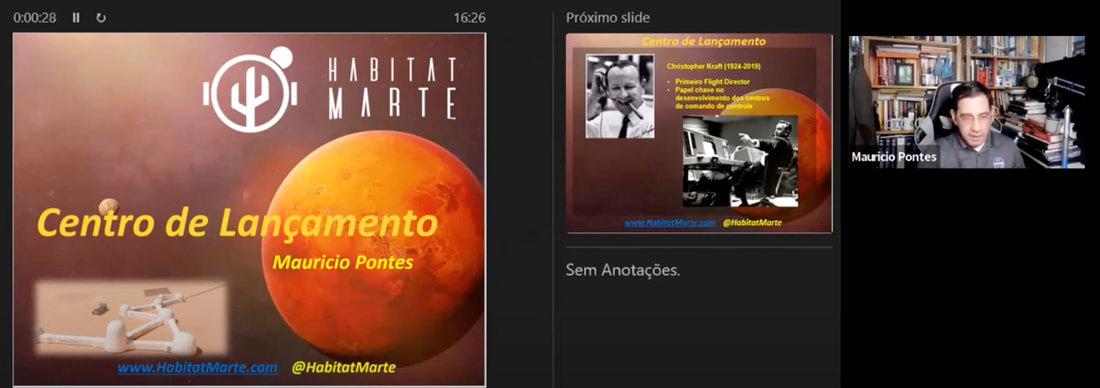 Numa missão virtual, um clima de imersão e interação entre os cinco tripulantes é estimulado pela rotina de atividades como coleta de dados, apresentação de relatórios sobre o estado físico e mental e, ao longo dessa jornada, vai se criando uma atmosfera de imaginação coletiva acerca da presença no planeta vermelho, com o benefício da dinâmica das relações por interações remotas. Cada tripulante recebeu a incumbência de ser responsável por uma das estruturas críticas da estação (Estação Central e Centros de Engenharia, Saneamento, Saúde e Lançamento). Ao final, cada membro da missão fez uma apresentação sobre sua área de responsabilidade, encerrando a missão. Minha experiência pessoal na missão virtual foi ser o responsável pelo Centro de Lançamento (e retorno). Além de estar comprometido com a operacionalidade dessa área, incluí na rotina de relatórios o status “go & no go”, em função das condições técnicas ou meteorológicas, de modo a manter a estação ciente da viabilidade de um lançamento emergencial. A rotina de envio de relatórios é o grande gerador de valor para a simulação e vai ao encontro dos aspectos humanos: discutíamos situações que não decorreram de inputs do simulacro. Trocávamos informações e fotos, fomos inspirados a viver uma realidade paralela e a explorar nossa criatividade.
Conversas sobre a missão e até pessoais foram constantes através de plataforma de mensagens e me mantiveram em constante “presença” naquela estação. Os dois relatórios de rotina diários (meteorologia e condições pessoais, como saúde, motivação, estado mental e satisfação com a missão e suas especificidades) eram enviados por um aplicativo e nos lembravam da nossa responsabilidade na jornada. Há potencial para ainda mais integração, pois nenhuma missão é igual à outra. Quem sabe, no futuro, um ambiente visual via aplicativo que possa até ser compartilhado com óculos de realidade virtual e celular não elevem ainda mais esses efeitos? 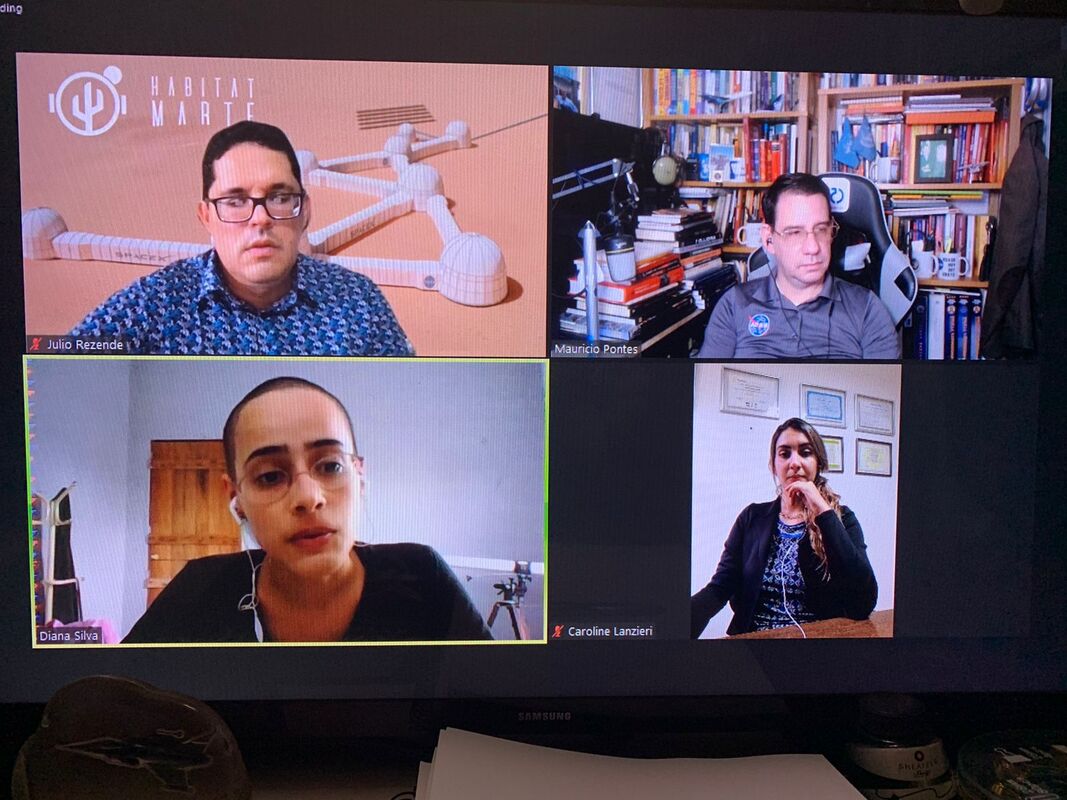 Minha conclusão foi a de que estímulo ao pensamento, diversidade e o fator lúdico já são uma ferramenta de integração e compromisso com a missão de grande valor.
Parabéns aos tripulantes da Missão 96 e em especial ao Prof. Julio Rezende, pelo pioneirismo, determinação e criatividade. Próximo passo: a missão presencial! Author: Karin Brünnemann, PMP®Karin Brünnemann is PMI Slovakia’s first interplanetary project manager. Karin has more than 25 years of experience managing global strategic projects. She helps companies during phases of cultural change and digital transformation. Apart from being a PMP®, Karin is also a certified trainer for intercultural management. She is currently using her project management expertise in her work as a Flight Planner for the Austrian Space Forum’s AMADEE-20 analog Mars mission.
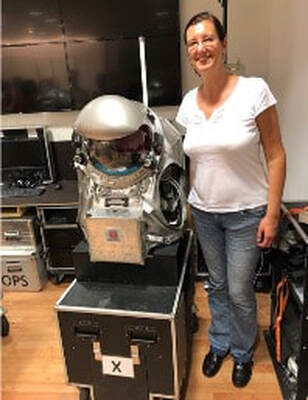
The AMADEE-20 analog Mars mission took place in Israel’s Negev desert during October 2021. Over the course of four weeks, an international crew of six analog astronauts conducted a number of experiments to study human behaviour and well-being; tested technical equipment, vehicles, and space suits; and deployed platforms and procedures in the areas of geoscience and life detection. A further aim of this Mars simulation was the development of a state-of-the-art Mission Support structure. I joined the AMADEE-20 team as a Flight Planner two years ago. In this role, I have been using my project management skills to help prepare and conduct scientific experiments as a member of the Mission Support team. Each experiment can be viewed as a subproject in itself and needs to be managed meticulously.  Sarah Feilmayr/OeWF (Austrian Space Forum)© Sarah Feilmayr/OeWF (Austrian Space Forum)© There are many similarities between my work as a Project Manager on Earth and my assignment as a Flight Planner for the analog Mars mission. To begin with, a Mars mission, whether simulated or real, is of course, a project. It is humanity’s most challenging, complex, risky, and expensive project. Like any other project, it can be divided into process groups. I started work on the AMADEE-20 Mars simulation during the planning process. One of my main tasks as a Flight Planner at this stage was to obtain a full and very detailed description of the experiments (subprojects) I had been assigned to. The output of these descriptions are documents comparable to a project charter. Since time “on Mars” is very limited during the mission, resources have to be assigned very carefully to the different experiments (subprojects) in order not to run into any resource conflicts. Furthermore, just like international projects on Earth, (analog) astronauts and Mission Support team members will experience cross-cultural differences and will be trained to handle them. One major difference between the projects I am normally working on, and this Mars simulation is the detail to which experiments (subprojects) have to be managed. Usually, I plan tasks for my project teams on a daily basis. For analog Mars projects, we have to plan tasks in time slots of 15 minutes. During a simulated and later real Mars mission, astronauts must wear space suits to protect themselves from the hostile environment on our neighbouring planet. As it takes a long time to put on a space suit and as they are very heavy and not comfortable to wear and work in, the time the astronauts can spend outside their habitat is very limited and therefore, very valuable and must be scheduled in great detail. Another difference is the high risk to human life and well-being, as well as to the safety of the usually very expensive equipment. Communication also poses a big challenge. The entire team has to almost learn a new language, consisting of many acronyms specific to space exploration. Simple Earth-words like “yes” and “no” are not used, since they can easily be misunderstood; we use “affirmative” and “negative” instead to express approval or disagreement. Despite these differences, as a certified PMP® and trained analog Mars Mission Support team member, I am well prepared to take on this challenge. And as a Project Manager, I am of course, very much enjoying to expand my skills beyond Earth and to be part of creating the future of space travel and project management. If you want to learn more about this analog Mars mission, please visit https://oewf.org/en/portfolio/amadee-20/. If you want to learn more about project management for analog Mars missions, please contact me at [email protected] or https://www.linkedin.com/in/karinbrunnemann/.  Mars panorama taken by Exploration Rover Spirit (2005). Image source: NASA Jet Propulsion Laboratory Introduction from Eija Salmi, Secretary General, Cumulus Assoc. & Thais Russomano, CEO, InnovaSpace: During the 21st century outer space has become a topic for discussion by passionate people in design universities worldwide. Some institutions have piloted initiatives and have ongoing activities in the art, design and media curriculum focused on space, considering how design can contribute to overcoming the challenges humanity will encounter when exploring this new frontier. We know for certain that living off-Earth will bring multiple challenges that require innovative solutions if we are to inhabit another planet. The field of design will be an essential element in facilitating space life, just as it is present everywhere in our lives here on Earth, whether on its own or collaboratively with other disciplines, such as medicine, engineering etc. Design education and research plays a massive role not only for the design profession, but also for business, industry and other institutional stakeholders in the space era to ensure a good, healthy and secure space future. The aim of this blog today, written by Dr Dolly Daou, is to share knowledge and inspire all of us to rise to the challenges of humanity’s tomorrow in outer space – inspired by design. This is the first in a series! Enjoy and please do share on your social media! 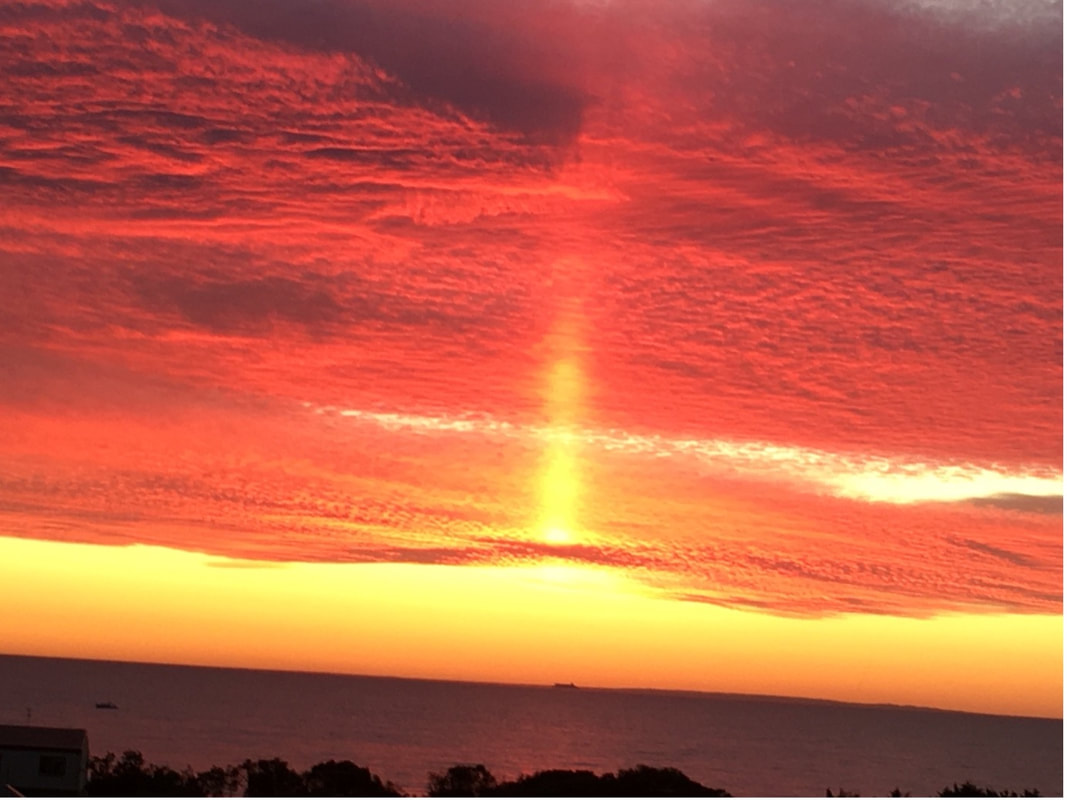 Planet Earth. Air, water, and soil. Sunset, Melbourne, Australia. Photo credit ©Dolly Daou On Planet Earth, we have been accustomed to living our lives conditioned by daily habits; we eat, sleep, cook, work, walk, build, interact according to our environments, grounded by gravity. Culturally, we differ in customs, in habits, we eat different food, we live differently, we speak different languages, however what unifies us is the relationship between our physiology and our topography. This relationship is the result of the universal gravity system and the evolution of beings and their environment on Planet Earth, the Blue Planet. The colour blue refers to the interaction of solar rays with the gases of Earth's atmosphere. Similarly, Planet Mars is known as the Red Planet in reference to the mass of red soil that covers its surface. The colour coding of both planets reflects the relationship between our biological existence and our environmental characteristics, which influence our daily habits and our survival traits on these planets.
|
Welcometo the InnovaSpace Knowledge Station Categories
All
|
 RSS Feed